
Whether you’re planning a quick refresh of your home or dreaming of a full-blown remodel, you know the one room that demands your undivided attention is the kitchen. As the place where meals are prepared, secrets are shared, and memorable moments are created, a kitchen is the heart and soul of a house.
Maybe that’s precisely why so many people struggle when designing one. A kitchen is many things to many people. It must be as functional as it is appealing. So where do you start?
A good first step is calling Natale Builders. We’re experts in kitchen design concepts.
Here are some tips for designing a kitchen that’s both efficient and aesthetically pleasing.
Layout is the backbone of kitchen design. Insofar as it determines how easily you can move around while cooking or cleaning, layout can make or break a kitchen’s functionality.
Traditional kitchen designs include the U-shaped, the L-shaped, and the galley. But the design that best optimizes space and movement is the work triangle, which arranges the sink, refrigerator, and stove—the three key kitchen features—in a triangle.
One of our clients struggled with her L-shaped kitchen. It felt cramped and inefficient. Redesigning her kitchen according to the work-triangle concept, we turned it into a space she loved, one that not only had the look and feel she wanted but also the functionality; navigating between the three core areas was much easier.
A functional kitchen design uses space efficiently. Cabinets that reach to the ceiling, pull-out drawers for pots and pans, and built-in storage in kitchen islands are all smart ways to use available space.
Adequate storage keeps your kitchen clutter-free and promotes a smooth cooking experience.
Lighting in the kitchen isn’t merely about aesthetics. It’s a crucial functional element that can impact the cooking and dining experience. A well-lit kitchen needs various light sources. Task lighting is essential for areas where you chop, cook, and clean. Ambient lighting sets the mood and tone of the space.
A kitchen is subject to spills, stains, and heat. Choosing materials that can withstand all this without losing their charm is key. Granite, quartz, and laminate are popular options for countertops because they’re durable and easy to maintain.
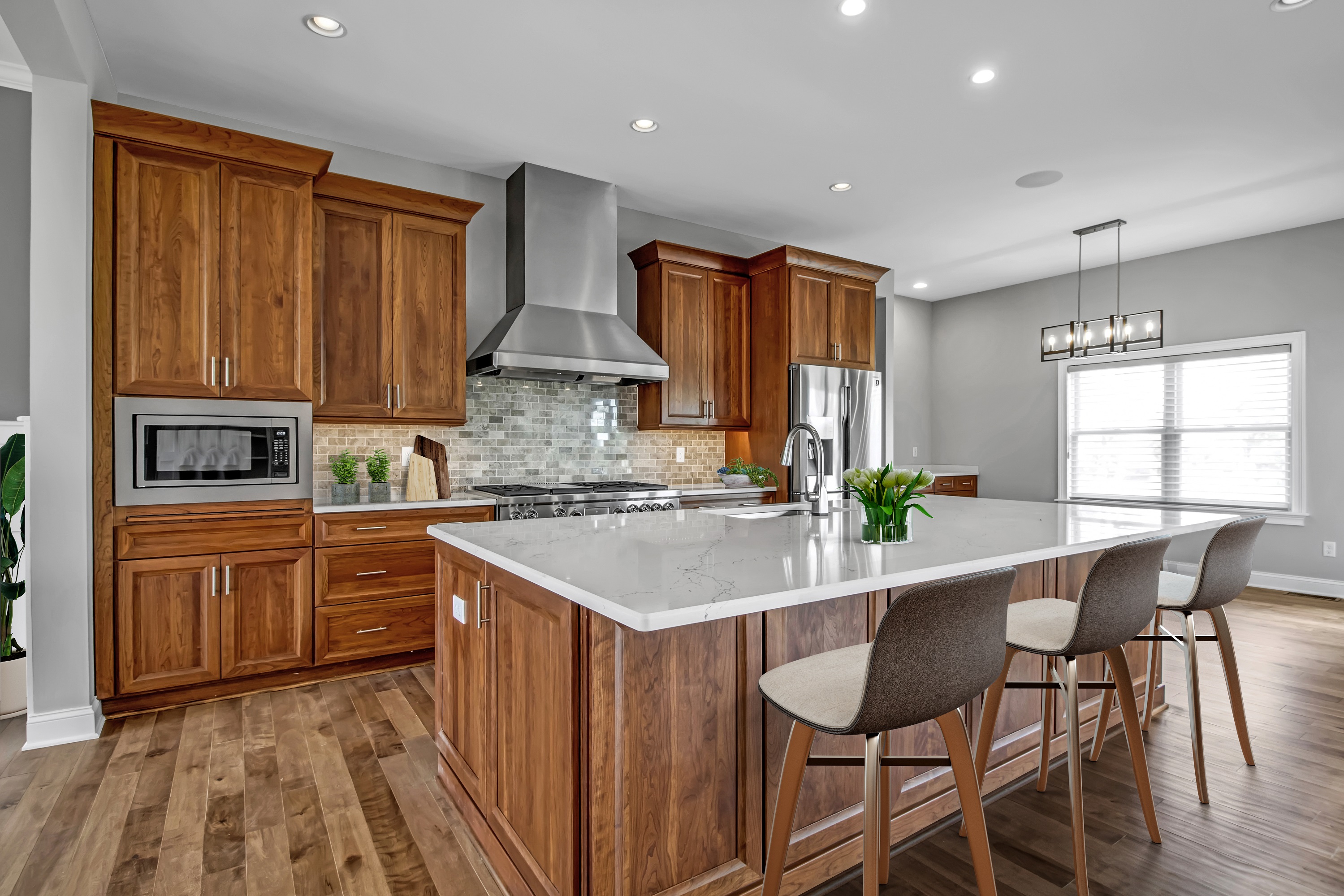
Proper ventilation keeps your kitchen smelling fresh and reduces grease and grime buildup. Invest in a good-quality range hood that sucks up the smoke, steam, and odors, keeping your kitchen and the rest of the house fresh.
Designing a functional kitchen requires planning, understanding your habits, and envisioning the flow of your space. If the process feels overwhelming, don’t worry; Natale Builders is here to help. Our team of experts, well-versed in kitchen design and interior-design kitchen principles, will ensure that your kitchen is not only beautiful but also caters to your unique needs and lifestyle.
Are you ready to craft the custom home of your dreams in Western New York? The team at Natale Builders has the expertise, craftsmanship, and commitment to bring your unique vision to life. Whether it’s an eco-friendly design or a luxury dwelling, we’re here to create a space that reflects your style and meets your needs. So, don’t wait another day to begin your custom home journey. Call us now, at 716-580-3318, and let Natale Builders turn your dream home into a reality!
â€